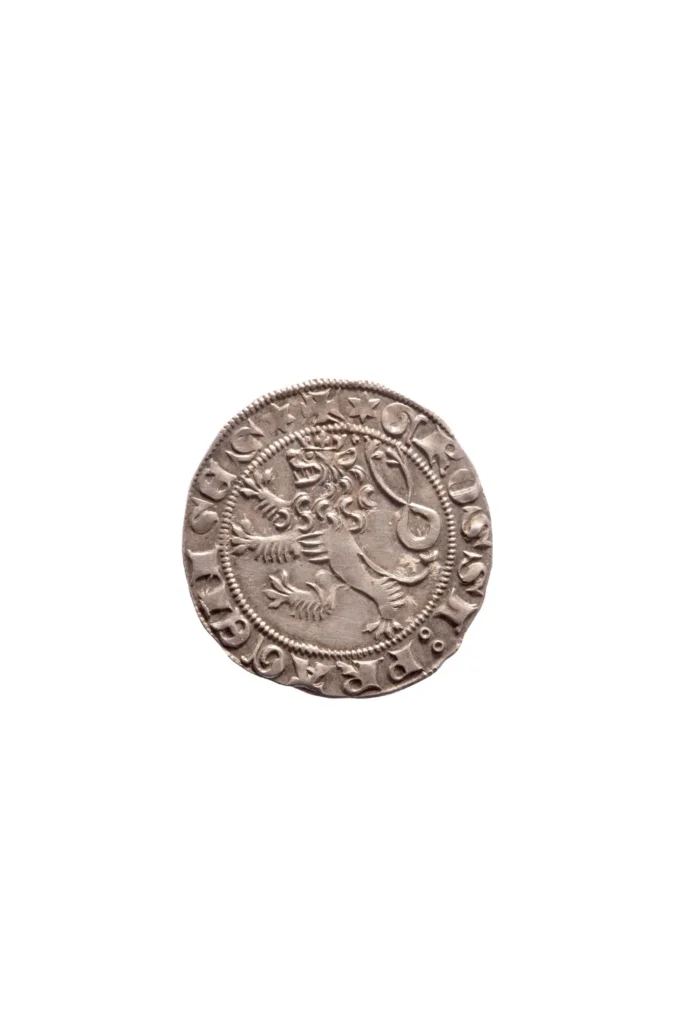
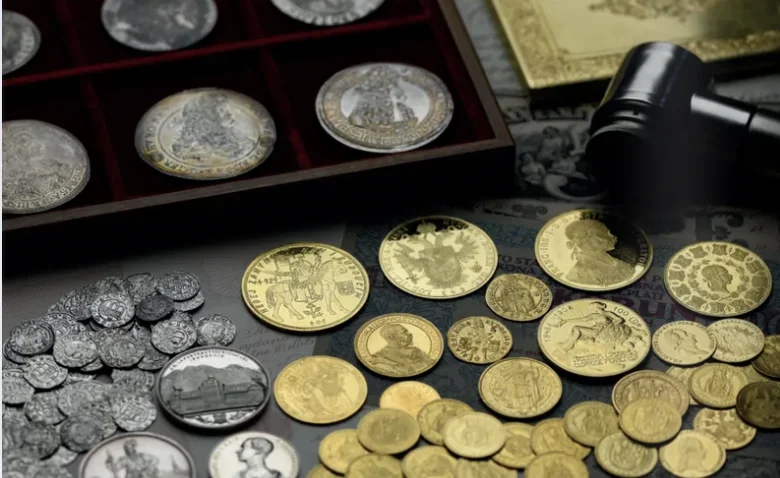
It all began when rich silver deposits were discovered in the Ore Mountains. This discovery not only brought enormous economic benefits to the Kingdom of Bohemia, but also laid the foundation for a currency that would later influence the entire world and whose legacy extends to today’s dollar. We refer to this period as the “thaler period,” which brought flourishing prosperity and strengthened the importance of Bohemia in Europe.
What events preceded the creation of the thaler?
A breakthrough in silver mining
At the beginning of the 16th century, the discovery of silver deposits in the Ore Mountains gave the Kingdom of Bohemia an immense source of power and wealth, as it became the epicenter of coinage. The Ore Mountains, which until then had remained on the margins of interest, thus found themselves at the very center of European affairs. Thanks to the exceptional volume of silver mined, Jáchymov and its surroundings became synonymous with development and wealth. This was nothing new in the world. It had happened many times before in the history of cities as a result of the discovery of precious metal deposits.
This revolutionary moment had a significant impact not only on the region, but also on the spread of thaler coinage throughout Europe. The large influx of silver into the Kingdom of Bohemia was the basis for the era of thaler coinage. For collectors and investors in historical coins, Habsburg thalers, for example, are unique and valuable works of art that bear witness to an important period in our history. There were many types of thalers, from countless rulers and many mints, ensuring a varied selection for collectors. In addition, different minting techniques can be observed, each of which may appeal to collectors and investors in different ways.

Economic needs of medieval Europe
The Middle Ages were a time when Europe faced a major challenge: how to ensure a uniform and reliable currency for everyone that would facilitate both domestic and international trade. Trade was specific because various coins of different fineness and quality appeared on the market, which meant a more complicated trading process. Not to mention that, as in every era, counterfeits or “suberats” appeared on the market. Eventually, a currency was introduced that brought order to trade: the thaler. Thalers were standardized, with more or less fixed purity and weight, even though these parameters changed over the course of history and macroeconomic situations. This led to better general tradability and convertibility.
The thaler influenced European monetary systems as follows:
- They became a model – Many countries took inspiration from the thaler for their own monetary systems.
- They facilitated trade – Thanks to thalers, international trade became easier.
- Supported the economy – Stability and confidence in the thaler helped the economy grow.

Who had the first thalers minted and why?
The influence of the Šlik family on the minting of thaler coins
The story of the Šlik family is a fascinating tale of rise to prominence, innovation, and courage. The Šliks, an important noble family from the Ore Mountains, played a key role in the birth of the thaler. It was they who discovered rich silver deposits on their estates in 1516 and later decided to use this silver to mint coins. This was mainly because they needed to repay a loan to Nuremberg bankers for their mining business.
Specifically, on January 9, 1520, Count Štěpán Šlik of Holíč received permission from the provincial assembly to mint his own coins, which bore the Šlik family crest. This was unheard of at the time, as it was not a ruling noble family, but a private noble family. It was not until October 17, 1523, that the Czech and Hungarian King Louis II Jagiellon approved the minting. The Šlik family thus secured a virtual monopoly on the mining of precious metals, with far-reaching economic and political consequences. After the unique success of the Šlik family, the thaler, weighing around 27 grams, began to attract the attention of the whole of Europe due to its purity. In the 1520s, the Šlik family exported millions of thalers abroad.
Conclusion
The thaler embodies a story that continues to influence today’s world even after more than 500 years, reminding us of an economically successful period in our history. One of its legacies today is its connection to the US dollar. The name “dollar” is derived from the word “thaler”.