The golden treasure of the free Czechoslovak Republic
When people think of the golden treasure of the newly formed Czechoslovak Republic, they usually imagine the gold that laid the foundation for the state reserves when the independent state was established. However, the First Republic left us another golden legacy in the form of St. Wenceslas ducats. These became a symbol of the independent state and its economic power. St. Wenceslas ducats were a popular investment and a prestigious gift. By purchasing a ducat, people expressed their economic status and civic attitude towards the newly established republic.
The appearance of the ducat defined by law
The exact appearance of the St. Wenceslas ducat was defined by a law from 1923. At that time, it was stipulated that the Czechoslovak ducat would be a commercial coin minted in accordance with historical parameters of weight and purity (ducat weight 3.49 g and gold purity 986/1000). The law specified the technical characteristics of the ducat and the double ducat, as well as its exact appearance, namely the use of a specific motif of St. Wenceslas.


The first three St. Wenceslas ducats for President Masaryk
Minting began in 1923 at the Kremnica Mint, and the first thousand ducats were numbered. The ducats had the same central motif, but the first thousand copies were supplemented with an embossed number on the surface. These first, rarest, numbered mintings of St. Wenceslas ducats were intended for the most important political figures of the newly founded Czechoslovak state. From a collector’s point of view, these are some of the rarest examples of St. Wenceslas ducats.


The first three ducats were given to President Tomáš Garrigue Masaryk. The very first and most valuable one was donated by the president to the nation at the end of his life – today, this ducat is part of the collections of the National Museum. The value of this St. Wenceslas ducat is basically priceless; it is completely unique and, moreover, connected with the figure of the first president. However, interesting stories are also linked to the other numbered ducats, which were given to other important figures of the First Republic. In many cases, these ducats were passed down from generation to generation and are thus an authentic historical document of the turbulent history of specific families and the entire Czech nation.

Subsequent series were minted in tens of thousands
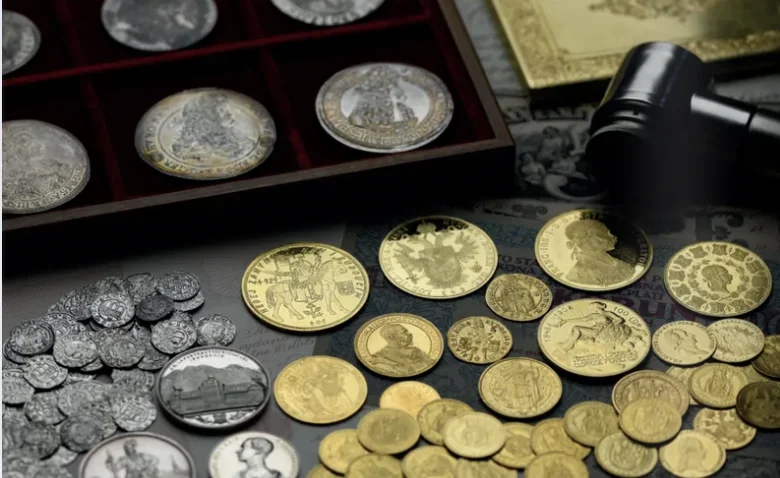
Subsequent series of these coins were minted regularly in quantities of several tens of thousands per year until 1936. Their value is therefore lower, but they are still very interesting to collectors. In addition to the best-known and most common ducat, two-ducats, five-ducats, and ten-ducats were also minted, with the ten-ducat being the largest denomination in the St. Wenceslas edition. At the end of the First Republic, during the dramatic years of 1937 and 1938, only a few dozen coins were minted, which is why these ducats are very valuable to collectors. In 1939, only one-ducat coins were minted, and also in very limited quantities.


All St. Wenceslas ducats were an official part of the monetary system, even though they were so-called trade coins used to store the population’s savings in gold. Ducats were popular as gifts for loved ones or as contributions to a cradle for a newborn child. During World War II and after the rise of communism, ducats helped many emigrants overcome difficult beginnings in foreign countries.
Let us and our descendants not perish
The St. Wenceslas ducat is a beautiful coin of unquestionable aesthetic quality. Saint Wenceslas in chain mail and with a sword at his belt is depicted on the obverse of the ducat, holding a banner in his right hand and leaning on a shield with an eagle in his left hand. The image on the coin is framed by the plea DO NOT LET US AND FUTURE GENERATIONS PERISH. On the reverse side of the St. Wenceslas ducat is a small state emblem and the inscription REPUBLIKA CESKOSLOVENSKÁ (Czechoslovak Republic) around its circumference.
The design of the St. Wenceslas ducat was the result of a public competition in which a jury of experts selected from more than 80 anonymous designs. The authors of the winning design were two prominent artists – painter and graphic artist Jaroslav Benda and academic sculptor Professor Otakar Španiel. After minor adjustments, the final design of the St. Wenceslas ducat was approved by the then Minister of Finance, Alois Rašín, from his hospital bed shortly before he succumbed to a tragic assassination.
Saint Wenceslas as a symbol of a determined nation and a stable currency
The choice of Saint Wenceslas as the main motif of the Czechoslovak ducat was logical and natural. Saint Wenceslas is the first Czech saint, a member of the oldest Czech ruling dynasty, the Přemyslids, the patron saint of the Czech lands, and a respected symbol of Czech statehood.
Saint Wenceslas was also held in special esteem by the Czech king and Roman emperor Charles IV, who considered him the main protector of the Czech kingdom. That is why, between 1345 and 1346, he had the Crown of Saint Wenceslas made for his coronation – one of the oldest and most beautiful royal crowns in Europe. Saint Wenceslas was also revered by the Hussites, for whom he was a model example of a Christian ruler and warrior. The historical significance of Saint Wenceslas’ legacy is also illustrated by the ancient Saint Wenceslas chorale, from which comes the plea “Do not let us and our descendants perish,” which is engraved on the Saint Wenceslas ducats.
The Czech revivalist efforts of the 19th century were based on the St. Wenceslas and Hussite traditions. The symbolic significance of St. Wenceslas was also used by Czech and Slovak legionnaires during World War I in Russia. And the newly founded Czechoslovak Republic seamlessly continued the deep St. Wenceslas tradition.
Five and ten ducats were minted to mark the millennium anniversary
In 1929, on the occasion of the millennium anniversary of the death of Saint Wenceslas, another law was passed on the minting of Saint Wenceslas five and ten ducats, which differ in design from the traditional ducat. The obverse of both coins features an image of Saint Wenceslas on horseback with a sword in his right hand and a palm branch in his left.


After World War II, the minting of St. Wenceslas ducats was resumed in 1951 for the purposes of international trade, with the motivation to symbolically compensate for the First Republic. However, this was the last minting of ducats with the traditional image of St. Wenceslas. Subsequent mintings of rare coins by the communist regime did not continue the tradition of St. Wenceslas ducats.


Rare mintings of St. Wenceslas ducats with high value
Throughout their rich history, St. Wenceslas ducats have gained great popularity around the world and are still highly valued today. During the First Republic, traditional St. Wenceslas ducats sold for between 100 and 150 CZK. Their value is much higher today, and this is doubly true for rare coins and mintings – unique coins are worth millions of crowns. One of the St. Wenceslas five-ducat coins from 1937 (only four were minted) sold at auction in 2020 for a breathtaking 850,000 euros, which is about 23 million Czech koruna.
You are unlikely to come across such a coin when building your numismatic collection. But if you have succumbed to the charm of rare antique gold coins, a St. Wenceslas ducat should not be missing from your collection. And we will, of course, be happy to help you find and purchase them. Beginners who are just starting out in numismatics and experienced collectors looking for a specific coin can contact us. Just write or call us.